

Reflow Oven
What Is Reflow Oven
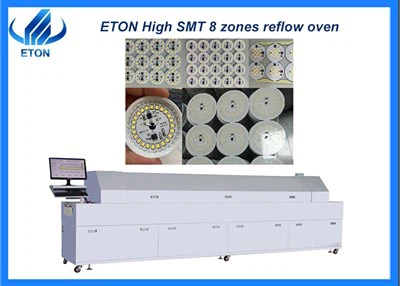
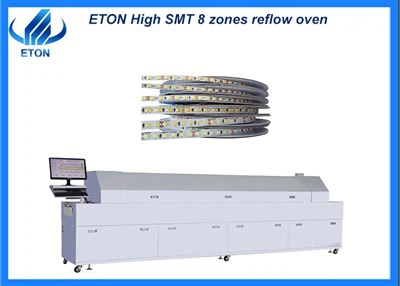
Reflow ovens are electronic heating devices used to mount electronic components to printed circuit boards (PCB) using surface mount technology (SMT). The electronics manufacturing industry maintains SMT as an industry standard due to the advantage it offers of simpler construction of electronic devices. Reflow ovens vary in size and type. Commercial reflow ovens range in cost from thousands to tens of thousands of dollars. The option to construct homemade reflow ovens reduces costs; however, it also limits both functionality and durability.
The invention of the reflow oven solved the problem of excessive time consumption involved in manually soldering electronic components to printed circuit boards. Modern convection reflow ovens feature high thermal transfer efficiency, allowing for shorter profiles and more consistent, even heating compared to earlier models.
Advantages of Reflow Oven
Precise temperature control
More temperature zones allow for finer control over the heating and cooling rates during the soldering process. This precision ensures that components are soldered correctly without damaging sensitive parts or PCBs.
Uniform heating
With 10 temperature zones, heat distribution can be highly uniform, reducing the risk of thermal stress on components and PCBs. This helps prevent defects such as solder joints cracking or delaminating.
Versatility
Different components and PCBs may require specific soldering profiles. Having more temperature zones allows for greater flexibility in creating custom profiles to suit various soldering needs.
Enhanced process control
Each zone can be independently controlled, monitored, and adjusted as needed, providing tighter process control and consistent results. This minimizes defects and improves overall product quality.
Energy efficiency
Improved control over the heating and cooling phases can result in energy savings by optimizing the heating elements and reducing unnecessary power consumption.
Reduced Downtime
A higher number of temperature zones can reduce the time needed for temperature transitions, allowing for faster production cycles and reduced downtime.




Why Choose Us
Sales Market
We have a large market share in the USA, Korea, India, Germany, and Turkey, as well as in more than 20 other countries. Our local engineers in India (Delhi, Mumbai, and Daman), Turkey, Egypt, and elsewhere provide great convenience.
Technology Patent
We focus on professional and efficient technology development and innovation. We hold 9 invention patents, 112 practical patents, and 12 software copyrights. Additionally, ETON has invented the fastest automatic pick-and-place machine, capable of a speed of 250,000 CPH.
Our Certificates
We have several important certificates, including the CE certificate, the CCC certificate, and the SIRA certificate. Each of these certificates demonstrates our commitment to quality and safety.
Our Services
ETON offers comprehensive services: pre-sale, on-sale, after-sale, and technical support. Our professional service team has rich experience to ensure we address our customers’ questions. We always strive to provide the best support to you!
Types of Reflow Oven
Infrared (IR) ovens
Infrared ovens heat the PCB assembly using infrared radiation. This highly efficient heating method directly transfers energy to the solder paste and components, resulting in a rapid heating process. However, IR ovens can cause uneven heating due to the absorption characteristics of different materials, which may lead to temperature variations across the PCB assembly. Infrared ovens are typically less expensive than convection ovens but are less commonly used in modern electronics manufacturing due to the potential for uneven heating.
Convection ovens
Convection ovens use heated air to transfer heat to the PCB assembly. These ovens can be further classified into two subcategories: forced air convection and vapor phase reflow ovens. Forced air convection ovens to use fans to circulate hot air around the PCB assembly, providing uniform heating and minimizing the risk of temperature variations. Vapor phase reflow ovens use a heat transfer medium, such as a specialized liquid with a high boiling point, to heat the PCB assembly evenly. When the liquid vaporizes, it transfers heat to the PCB assembly, resulting in a highly controlled and uniform heating process. Convection ovens are generally more expensive than IR ovens but provide superior temperature control and even heating, making them the preferred choice for modern electronics manufacturing.
How to Choose a Reflow Oven


Look at the appearance and volume.
Reflow oven is surface soldering through high temperature action. The longer the PCB stays in the reflow oven, the better the soldering effect will be. Therefore, the larger the volume of the reflow oven machine, the longer the heating zone.
Look at the inner tank.
After production process improvement and continuous innovation, domestic reflow oven has already possessed a considerable technical foundation, but the cost of a well-made product must be increased, such as the furnace liner! Pls kindly see below ETA Lyra reflow oven inner tank photo.
Look at the heating part.
Just lift the lid and open the upper furnace. You can see the heating element. Generally, small and economical reflow oven is limited by the external size, using heating tubes to generate heat. There are two types of heating tubes: one with heat sink and the other with polished rod.
Look at the transmission and transportation situation.
The reflow oven process is well made. In operation, the mesh belt is very stable and does not shake. If the conveyor is vibrated, it will cause welding defects such as displacement of solder joints, suspension bridges, and cold welding.

Due to the need of continuous miniaturization of electronic PCB board, the appearance of sheet and element, the traditional welding method has been unable to meet the needs. In hybrid integrated circuit board assembly adopted the reflow soldering, assembly welding components mostly chip capacitors, chip inductor, SMT transistor and diode etc., with the development of SMT the whole technology improvement, the emergence of a variety of SMT components in SMT components, as part of SMT technology reflow soldering process technology and equipment have been expanded to a corresponding its applications are becoming more and more widely, almost have been applied in the field of all electronic products.
Reflow soldering is to realize the mechanical and electrical connection between the solder end or pin of surface assembly components and the PCB solder pad by remelting the paste solder predistributed on the PCB solder pad. Reflow soldering is to weld the components to the PCB board, and reflow soldering is to surface mount the devices. Reflow soldering is based on the role of hot air flow on solder joints, colloidal flux in a fixed high temperature airflow under the physical reaction to achieve SMD welding; It is called "reflow soldering" because the gas circulates through the welder to produce high temperatures for welding purposes.
Application of solder paste
Solder paste, a mixture of solder alloy particles and flux, is applied to the pads on the PCB where the components will be attached.
Component placement
Surface-mounted components, such as resistors, capacitors, integrated circuits, and other electronic parts, are placed onto the solder paste on the PCB.
Preheating
The PCB with components is gradually heated in the reflow oven. This preheating stage helps to remove any moisture or solvents from the solder paste and prepares the assembly for soldering.
Soldering
As the assembly progresses through the reflow oven, it passes through different temperature zones. Eventually, it reaches the reflow zone, where the solder paste melts and forms a secure connection between the component leads/pads and the PCB.
Cooling
After soldering, the assembly continues to move through the cooling zone of the reflow oven, allowing the solder to solidify and create electrical connections.
The Five Stages of a Reflow Oven
The first and lengthiest stage is the pre-heating of the circuit, which requires bringing it up to a given temperature slowly. The heat distribution must be uniform, or the board could warp. This stage can last several minutes, as the temperature is only raised by about 3-5 degrees Fahrenheit per second.
Having reached the desired pre-heating point, the board passes to the second chamber for a thermal soak at that temperature, for 60-120 seconds. This ensures even heat distribution, as well as activating chemicals in the solder paste that prevent the solder from turning into microbeads, which it otherwise would.
The heart of the reflow soldering process happens here, where the circuit board is rapidly heated to maximum temperatures to fully melt the solder and bond it to the circuit board. Several heating methods can be used here, although conventional convection baking is still the most common.
The fourth chamber quickly cools the board, down to temperatures of 86 Degrees Fahrenheit. The cooling is more rapid than the heating, as fast cooling encourages the solder to form into a crystalline structure which creates a superior bond to the underlying board.
Not all manufacturing centers include a washing process, but they should - it's now commonly accepted by standards agencies such as the IPC. Most forms of solder paste leave a chemical residue, even those considered "no clean." Additionally, microscopic grit could have made its way onto the board during the manufacturing process.
Reflow Oven:Key Features and Considerations
01
Temperature profile control
Reflow ovens offer precise temperature control through multiple heating zones, allowing manufacturers to create customized temperature profiles to suit different solder pastes, components, and PCB designs.

02
Atmosphere control
Some reflow ovens provide the option to control the atmosphere inside the oven, such as by introducing nitrogen gas. This can help reduce oxidation and improve solder joint quality, particularly for sensitive components or lead-free soldering processes.

03
Conveyor speed control
The speed of the conveyor system can be adjusted to optimize the soldering process, ensuring proper heating, adequate time in each zone, and avoiding defects such as tombstoning or solder bridging.

04
Thermal profiling
Manufacturers often use thermal profiling systems to monitor and analyze the temperature characteristics of the PCBs as they pass through the reflow oven. This data helps ensure process consistency, identify potential issues, and optimize the reflow profile for improved solder joint quality.
Solder paste
Apply solder paste to the board that requires soldering. Only add solder paste to those areas required for soldering. You can use a solder mask and a solder paste machine to apply only to the necessary areas.
Pick and place
Apply the solder paste on the board and then place the components you require. If you need accuracy and manual placement is not an option, use a pick and place machine.
Reflow soldering stage
The reflow soldering stage consists of several individual steps due to the temperature changes. To properly control the temperature of the reflow tunnel will ensure the solder joints are properly attached. There are four stages used, as follows
Preheat
Bring the board to the required temperature. If you apply too much heat, the board can be compromised by thermal stress. When using infra-red soldering, the temperature rise rate is between 2 and 3 degrees Celsius. On some occasions, temperature rise rates, down to one degree per Celsius, can be used.
Thermal soak
This next stage is when the board temperature enters into the thermal soak area. Temperature is maintained here so that all areas are heated equally, and the other is to remove the solder paste. Shadowing effects may come up if the heat is not maintained.
Reflow
Reflow happens when you achieve the highest temperature of soldering, which is between 240 and 250 degrees Celsius for a Pb-Free (Sn/Ag) solder. The solder then melts to create solder joints. This reflow process involves the flux reducing a surface tension where the metal joins. This accomplishes a metallurgical bond and allows the individual solder powder to combine and melt.
Cooling
Cooling happens just after the reflow process in a way that does not damage or put stress on the board and the components. Upon completion, proper cooling prevents excess intermetallic formation or thermal shock. These typical temperatures should range from 30-100 degrees Celsius. These temperatures create a fast cooling rate to create a secure solder and provide a mechanically secure joint.
Reflow ovens
Reflow ovens are large machines for use with PCB assembly production. Many varieties of reflow ovens provide the soldering capabilities for both large and small assemblies. For prototype and rework areas, smaller reflow machines can be used. The ovens work well in smaller work areas due to their design.
PCB/Components footprint design
The PCB/Component Footprint Design influences how well the assembly reflows. The size of the tracks connects to a component footprint. Thermal imbalance is created when one side of the component footprint is a different size. Copper balancing can happen when PCB designs use larger copper areas. To aid the manufacturing process, the PCB can be put into a panel, but this can lead to an imbalance in copper.
Safety Precautions When Using the Reflow Oven
Wear safety protective work clothes
Ensure the use of safety protective work clothes when operating or maintaining equipment.
Power and air supply shutdown for maintenance
Prior to conducting maintenance, power down the equipment and cut off the air supply.
Stability during transportation
During transportation, take precautions to prevent shaking and vibration, as sudden movements can potentially damage the equipment.
No arbitrary cancellation of safety switch
Avoid arbitrarily canceling the safety switch or compromising the machine's safety features.
Adherence to warning labels
Pay close attention to all warning labels and refrain from relocating them randomly on the equipment.
Prohibition of operation with faults
The equipment should not be operated with any faults or hidden dangers.
Power shutdown for wiring or disconnection
Turn off the power before conducting any wiring or disconnection procedures.
Power down and plug disconnection for equipment movement
Prior to moving the device, ensure the power is turned off, and disconnect the power plug.
Caution with high-voltage components
Exercise extreme caution with high-voltage components in ser series reflow ovens. Avoid direct contact during operation to prevent serious harm or fatalities.
Protection during reflow furnace maintenance
The heat insulation material in the reflow furnace is exposed only during maintenance. Take care to avoid inhaling fibers and adhere to safety measures, including the use of protective masks, gloves, and work clothes.
Avoid touching moving parts
Refrain from touching moving parts, such as chains, sprockets, and pulleys during operation. During maintenance, handle moving parts with care, and ensure the power is switched off whenever possible.
Caution with heating element
Exercise caution to avoid direct contact with the heating element to prevent burns or other potential consequences.
What Are the Trends and Development Directions of Reflow Oven in the Market
Enhanced thermal uniformity
One of the most critical features in the performance of reflow ovens is thermal uniformity. Advances in oven technology have led to better heat distribution within the chamber, which ensures consistent soldering quality across the entire pcb. Manufacturers are continuously improving their heating technologies to achieve more precise temperature control, which is vital for the increasingly complex and miniaturized electronic components used today.
Integration of smart technologies
Smart technology integration is becoming commonplace in reflow ovens, enabling features such as real-time monitoring and control of the soldering process. These smart ovens are equipped with sensors and connected technologies that allow for remote diagnostics, adjustments, and data analytics. This not only enhances the reliability and efficiency of the soldering process but also helps reduce downtime and maintenance costs.
Focus on energy efficiency
Energy efficiency is a significant trend across all industries, and the reflow oven market is no exception. New models are being designed to consume less power while maintaining high performance. This is achieved through improvements in insulation, more efficient heating elements, and advanced software that optimizes the heating profile according to the specific requirements of each pcb. Energy-efficient reflow ovens not only lower operational costs but also contribute to a smaller environmental footprint.
Lead-free and green soldering processes
Environmental regulations and the increasing demand for green manufacturing processes have led to the adoption of lead-free soldering materials. Reflow ovens must be capable of reaching higher temperatures required for lead-free solder to flow correctly. Consequently, manufacturers are developing ovens that can operate at these higher temperatures without compromising the integrity of the components or the boards themselves.
Use of nitrogen atmosphere
The use of a nitrogen atmosphere in reflow ovens is a growing trend that helps improve soldering quality by reducing oxidation during the soldering process. Nitrogen reflow ovens can produce higher quality solder joints and reduce the incidence of solder defects. This trend is particularly important for manufacturing high-reliability electronics, such as those used in automotive or aerospace industries.
Compact and modular designs
As electronic manufacturing facilities often face space constraints, there is an increasing demand for compact reflow ovens that can fit into smaller production lines. Modular designs are also becoming popular, allowing manufacturers to easily expand or modify their production capacity by adding additional modules. These space-efficient and scalable solutions are ideal for manufacturers who need to quickly adapt to changing production demands.
Advancements in conveyor mechanisms
The conveyor system within a reflow oven is crucial for the seamless transport of pcbs through the heating zones. Recent innovations have focused on improving these mechanisms to handle multiple board sizes more efficiently and with greater precision. Advanced conveyor systems are designed to minimize board warping and ensure uniform exposure to heat, which is particularly crucial for complex or densely populated boards.
Shenzhen ETON Automation Equipment Co.,Ltd. is a leading manufacturing and process solution provider focusing on R&D, production, sales, and service of SMT high-speed pick and place machines and SMT peripheral automation equipment. ETON has SMT high-speed pick and places machine division, precision solder paste stencil printer division, high-speed precision dispensing equipment division, and SMT peripheral automation equipment, division. ETON obtains a number of intellectual property technologies, including 9 invention patents, 112 practical patents, 12 software copyrights..


Our Certificate
CE certificate,CCC ce rtificate,SIRA certificate


Video
FAQ
We're well-known as one of the leading reflow oven manufacturers and suppliers in China. If you're going to buy high quality reflow oven with competitive price, welcome to get quotation from our factory.
Stencil Cleaning Machine, 450mm Mesh Belt 8 Zones Reflow Oven in SMT Line