

SMT Machine
What Is SMT Machine
The SMT machine is a commonly used device for placing components. The placement machine can be said to be the most advanced in the entire SMT production and plays a key role.
In the SMT production line, the placement machine can be described as the main equipment, in fact, the development speed is also very fast, from the early low-speed placement machine to the current optical placement machine, versatile and flexible connection, to meet the modern processing needs.
Advantages of SMT Machine
Small size and light weight
Because the components are directly mounted on the surface of the PCB, SMT technology is more compact, small in size and light in weight than THT technology, which is conducive to the portability and integration of electronic products.
High reliability
The solder joints of SMT chip processing have good uniformity and consistency, and are not affected by human factors, so the electronic products produced have high reliability and low failure rate.
High production efficiency
The SMT placement machine can realize high-speed automatic production and greatly improve production efficiency. SMD processing can be carried out continuously, and only a few links such as manual participation in feeding, board changing, etc., greatly shorten the production cycle.
Save materials and labor
SMT technology reduces the number of vias on the printed circuit board, saves material and reduces the amount of manual soldering, and reduces labor costs.
Adaptability
SMT chip processing technology can be applied to various types of electronic components, including small-volume, high-density, and multi-pin components, so that electronic products can be miniaturized and multi-functional.
Easy to upgrade and maintain
Due to their high level of integration and modular design, SMT-processed circuit boards make it easier to upgrade and maintain.


Why Choose Us
Sales Market
We have a large market share in the USA, Korea, India, Germany, and Turkey, as well as in more than 20 other countries. Our local engineers in India (Delhi, Mumbai, and Daman), Turkey, Egypt, and elsewhere provide great convenience.
Technology Patent
We focus on professional and efficient technology development and innovation. We hold 9 invention patents, 112 practical patents, and 12 software copyrights. Additionally, ETON has invented the fastest automatic pick-and-place machine, capable of a speed of 250,000 CPH.
Our Certificates
We have several important certificates, including the CE certificate, the CCC certificate, and the SIRA certificate. Each of these certificates demonstrates our commitment to quality and safety.
Our Services
ETON offers comprehensive services: pre-sale, on-sale, after-sale, and technical support. Our professional service team has rich experience to ensure we address our customers’ questions. We always strive to provide the best support to you!
Types of SMT Machine
Axial mounter
An axial chip mounter is a machine that positions and attaches surface-mounted components, such as integrated circuits (ICs), transistors, resistors, and capacitors, onto the printed circuit board (PCB) in an automated process.

Odd-form chip mounter
An odd-form chip mounter is a machine that automates the mounting of odd-form, nonstandard-sized components on the PCBs. These components are usually either small connectors or boards with large numbers of pins that cannot otherwise be inserted into a conventional socket or receptacle.

Radial mounter
A radial PCB chip mounters is a machine designed to automatically mount radial components—for example, chips with small footprints like resistors and capacitors—on both single-and double-sided PCBs. Radial component placement machines consist of four main parts: a picker, pushers, feeders, and ejector pins.
Components of SMT Machine
Feeders
SMT chip mounters are equipped with feeders that store and supply the electronic components for placement onto the PCB. The feeders can hold different component types, sizes, and quantities, allowing for flexibility in production.
Vision systems
Chip mounters are equipped with advanced vision systems that utilize cameras and image recognition algorithms to precisely locate the component and the target position on the PCB. This ensures accurate placement even on small, densely populated PCBs.
Placement head
The placement head is responsible for picking up components from the feeders and placing them onto the designated positions on the PCB. It uses vacuum suction or mechanical grippers to secure and position the components during the placement process.
Conveyor system
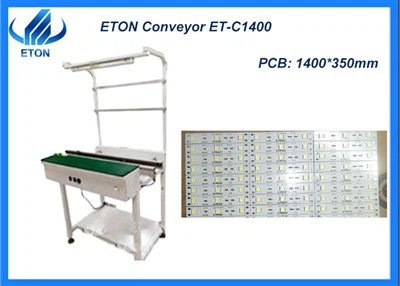
Chip mounters are integrated with conveyor systems that transport the PCBs through the assembly line. The conveyor system ensures a continuous flow of PCBs, allowing for efficient production and minimizing downtime.
Clean and remove the dust and dirt on the surface of the mounting machine and the circuit board. The purpose of maintenance is to prevent dust and dirt from dissipating heat inside the machine, which can cause electrical components to overheat and burn.
Clean and lubricate the moving parts of the mount machine. Due to improper environmental control, a large amount of dust adheres to the moving parts for a long time. The purpose of maintenance is to prevent the mount machine from timely and professional maintenance and cleaning of the moving parts of the machine. Long-term overload operation of the machine will certainly affect the service life of the machine;
After long-term operation, the relevant parts are easy to wear, deformation and aging, and the running-in deviation between the parts is small. The original parameters of the machine tool have been adapted to the state of the machine tool, which affects the positioning accuracy of the machine tool. Therefore, the purpose of maintenance is to calibrate the machine regularly so that the machine can be produced with high precision and improve product quality.
Remove and clean the internal air path, solenoid valve, vacuum generator and cylinder of the mounting machine; The purpose of maintenance is to avoid grease dirt in the oil line. If not timely cleaning and maintenance, the gas path will be blocked. Not smooth, resulting in high casting; In serious cases, the oil accumulated in the gas path will corrode the internal seals, solenoid valves, vacuum generators, cylinders and other components, resulting in component damage, which seriously affects the normal use of the machine;
If the installation of the SMT machine out of warranty, long time operation, the machine to carry out comprehensive professional maintenance? Certain parts of the machine are already in trouble. The purpose of this maintenance is to avoid hidden dangers that cannot be resolved in time, which will inevitably threaten the normal production of the machine in the future. Therefore, it is necessary to carry out major maintenance, timely inspection and discovery of hidden dangers in the SMT and to solve, in order to reduce the frequency of machine failure, improve production efficiency.
How to Choose a SMT Machine

01
Find out your requirements
You just read above that there are so many types of smt machines and each of them are suited for different scenarios. That's why, it's very important for you to analyze the entire scenario and determine which type of machine is the best one for your requirements.

02
Ensure machine compatibility
If you're planning on using multiple smt machines in your production plant, it's very important to find out that they're all compatible with each other. An automatic machine, oven, etc., are some smt machines that you'll be using. If they're not compatible with each other, you might have to put in some manual work as well, such as manually feeding your oven the circuit boards, etc.

03
Accuracy of the machines is must
There are so many machines manufactured by different manufacturers, but not all of them give the same performance. That's why, it's your job to analyze the machines, see demos, and make sure that they can place the components precisely on the circuit board. In smt, high precision is a must.

04
Cost & return on investment
Find out the operating cost of the machine, actual cost of the machine, machine transportation cost, installation cost, and the cost of hiring a technician who'll operate the machine to find out the overall cost.
How the SMT Machine Works
1.Component recognition
The vision system scans the feeder to identify the type, orientation, and position of the component to be placed onto the pcb.
2.Component pickup
The placement head, guided by the vision system, picks up the component from the feeder using a vacuum nozzle or mechanical grippers.
Component alignment
The placement head precisely aligns the component using the vision system's feedback. This ensures accurate positioning relative to the target location on the pcb.
Component placement
Once aligned, the placement head moves the component to the designated position on the pcb and gently places it using controlled force. This ensures proper solder joint formation during the subsequent reflow process.
Repeat process
The chip mounter repeats the above steps for each component, allowing for the rapid and accurate placement of multiple components onto the pcb.
Safety Precautions When Using the SMT Machine
Keep the operating environment clean and tidy, to avoid dust, hair and other impurities affect the welding quality and circuit performance.
In the welding of the pcba surface, not bare hands to take, in case the body secretion of grease affects the weldability.
Minimise the steps of pcba production, the operation of the process of dirty gloves should be replaced in a timely manner to avoid external pollution.
Pcb boards should not be stacked and placed to prevent physical wear and tear between the circuit boards.
To do a good job of discharging static electricity treatment, in order to prevent static electricity damage to components.
Prohibit the jumper placed under the ic or potentiometer, motor and other large volume of metal housing to prevent accidents.
Electrolytic capacitors are prohibited from contacting heat generating components such as transformers, thermistors, high power resistors and heat sinks.
The minimum line width, minimum over-wire holes, minimum pad and other parameters to meet the process requirements to ensure circuit performance and heat dissipation.
To reasonably arrange the location of the screw holes to avoid leaving holes or traces on the pcba surface.
In the tin-plating operation, pay attention to the location and thickness of the tin to prevent short circuits and circuit breakers.
Pay attention to the use of tools and materials during the operation to prevent waste and loss.
SMT Machine Basic Operation Instruction
Before using the machine, we need to check work, specific check that the smt placement machine, air pressure whether accord with a standard (different brand, use machine area standard, we can according to the directions to observe), the second inspection on the production environment temperature, humidity, production environment and determine the machine service life and efficiency, second inspection on hardware facilities, such as: Suction nozzle, lens, protective cover, such as emergency switch whether in normal circumstances.
First need to open the power supply of smt placement machine, boot, boot system, second to enter the system software part (different manufacturers, use different types of software in desktop obvious location), open the software, click button to return to the origin, let the machine to be able to return to the initial position and then, the next is warming up, the purpose is to better to smt environment, warming-up in ten minutes.
Select want to production program, select want to mount base board, waiting for the system to read data, and then to adjust the guide rail, customize the width of the guide rail, choose a suitable width (substrate can be transferred to the orbit of smt placement machine, but the width shoulds not be too big, 1-3 mm wider than substrate). Next, we start to check the material and compare whether the material we produce is correct. If there is any mistake, we can replace it in time and install the feeder after confirming that it is correct. Then click the produce button and the system starts running
Waiting for the target after the production, we need to shutdown the smt placement machine operation, click the stop button in the software (or stop) to make it out of production work, and then save the data to production base plate, shut down. Finally shut down the main machine to complete a production operation.
What Are the Trends and Development Directions of SMT Machine in the Market
Increased automation
Future benchtop smt chip mounters are likely to incorporate more automation features, reducing the need for manual intervention and increasing production efficiency. This could include advanced robotics, ai-driven vision systems, and automated feeder systems.
Enhanced connectivity
As the internet of things (iot) continues to grow, smt chip mounters are expected to become more connected. This could enable real-time monitoring, predictive maintenance, and seamless integration with other manufacturing systems.
Sustainable manufacturing
Sustainability is becoming increasingly important in electronics manufacturing. Future benchtop smt chip mounters may focus on reducing energy consumption, minimizing waste, and using environmentally friendly materials.
Miniaturization and high-density placement
As electronic devices become smaller and more complex, the demand for miniaturized components and high-density placement will increase. Future machines will need to handle these challenges with greater precision and reliability.
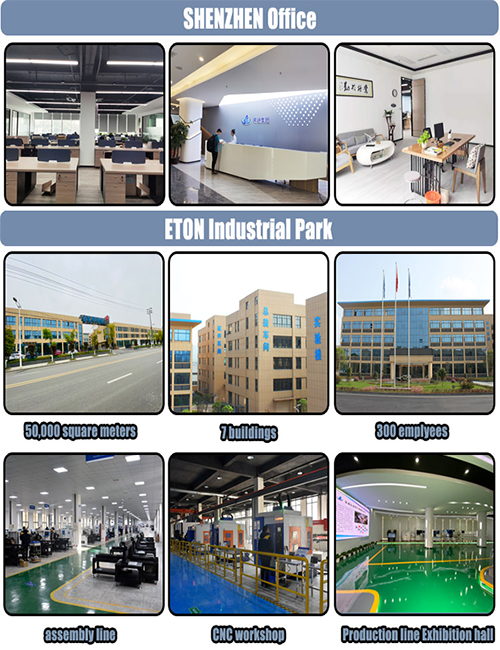
Shenzhen ETON Automation Equipment Co.,Ltd. is a leading manufacturing and process solution provider focusing on R&D, production, sales, and service of SMT high-speed pick and place machines and SMT peripheral automation equipment. ETON has SMT high-speed pick and places machine division, precision solder paste stencil printer division, high-speed precision dispensing equipment division, and SMT peripheral automation equipment, division. ETON obtains a number of intellectual property technologies, including 9 invention patents, 112 practical patents, 12 software copyrights..


Our Certificate
CE certificate,CCC ce rtificate,SIRA certificate


Video
FAQ
We're well-known as one of the leading smt machine manufacturers and suppliers in China. If you're going to buy high quality smt machine with competitive price, welcome to get quotation from our factory.
smt educational machine, smt thick film machine, smt commercial machine