

What materials can be processed in a reflow oven?
Hey there! As a supplier of reflow ovens, I often get asked about what materials can be processed in these nifty machines. Well, let's dive right in and explore the various materials that can be handled by reflow ovens.
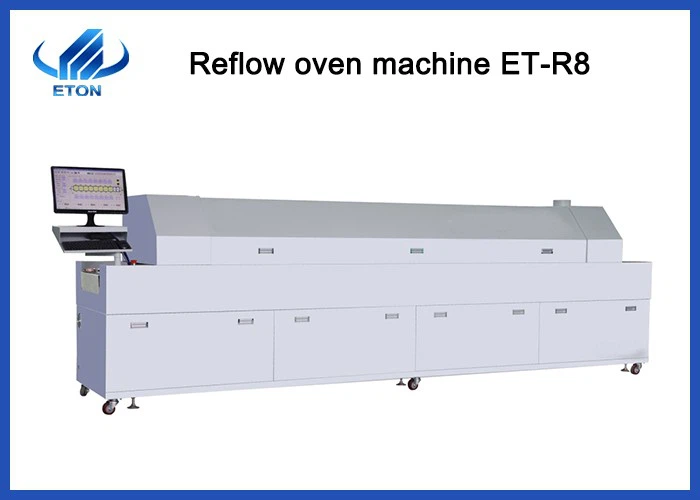
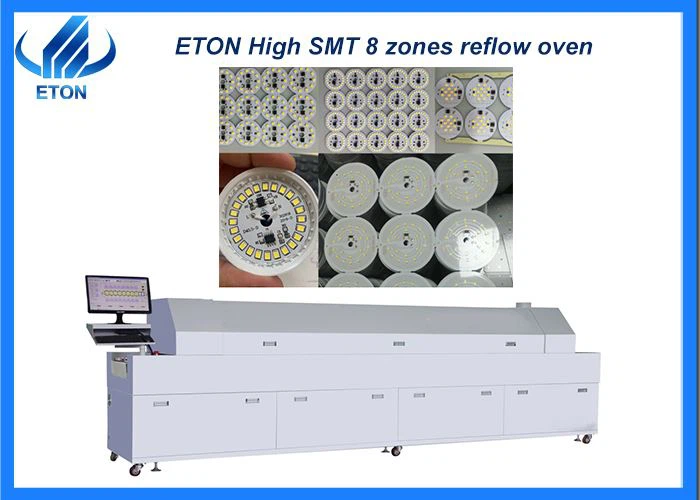
First off, let's talk about printed circuit boards (PCBs). PCBs are the backbone of most electronic devices, and reflow ovens play a crucial role in soldering components onto them. The solder paste, which is a mixture of tiny solder particles and flux, is applied to the PCB pads. When the PCB goes through the reflow oven, the heat causes the solder paste to melt and form a strong electrical and mechanical connection between the components and the PCB. Whether it's a simple single - layer PCB or a complex multi - layer one, reflow ovens can handle them all. For example, in the production of smartphones, tablets, and laptops, reflow ovens are used to assemble the intricate PCBs that power these devices. Check out our Reflow Oven Low Noise SMT 8 Zones Heating which is great for precise PCB soldering.
Another common material processed in reflow ovens is surface - mount devices (SMDs). SMDs are small electronic components like resistors, capacitors, and integrated circuits that are directly mounted onto the surface of the PCB. These components are placed on the PCB using pick - and - place machines, and then the whole assembly goes through the reflow oven. The oven's temperature profile is carefully calibrated to ensure that the solder paste melts at the right time and forms a reliable joint with the SMDs. Our High - speed Air - carrying Motor Reflow Oven Machine is designed to handle high - volume SMD soldering efficiently.
Ceramic materials can also be processed in reflow ovens. In some cases, ceramic substrates are used in electronic applications, especially in high - frequency and high - power circuits. The reflow process can be used to attach components to these ceramic substrates. The key is to control the temperature and heating rate to prevent thermal shock to the ceramic, which could cause cracking or other damage. The ability to precisely control the temperature makes our reflow ovens suitable for working with ceramic materials.
Metals can be part of the reflow process too. Sometimes, metal components need to be soldered onto a PCB or other substrates. For instance, metal heat sinks are often attached to power - hungry components like microprocessors. The reflow oven can be used to melt the solder and create a good thermal and mechanical connection between the metal heat sink and the component. Our SMT 450 Mesh Belt Reflow Oven High Efficiency can handle metal components with ease.
Plastic materials, although not as common as the others, can also be involved in certain reflow processes. Some plastic - based substrates or enclosures may require soldering of small components. However, special care must be taken because plastics have a lower melting point compared to other materials. The temperature profile in the reflow oven needs to be adjusted to ensure that the plastic doesn't deform while the soldering is taking place.
Now, let's talk about the factors that determine whether a material can be processed in a reflow oven. One of the most important factors is the melting point of the material. The reflow oven needs to be able to reach and maintain the temperature required to melt the solder without damaging the material. Another factor is the thermal conductivity of the material. Materials with high thermal conductivity will heat up and cool down faster, which may require adjustments to the heating and cooling rates in the oven.
The size and shape of the material also matter. Large or oddly - shaped materials may require a reflow oven with a larger chamber or special conveyor systems to ensure proper heating and handling. And of course, the quantity of materials being processed at once is a consideration. High - volume production may call for a reflow oven with a high throughput and fast cycling times.
In addition to these technical aspects, the quality of the reflow oven itself is crucial. A good reflow oven should have precise temperature control, uniform heating across the chamber, and a reliable conveyor system. Our reflow ovens are designed with these features in mind, ensuring that you get consistent and high - quality results every time.
If you're in the business of manufacturing electronic devices or other products that require soldering, you know how important it is to have a reliable reflow oven. Whether you're a small - scale operation or a large - scale manufacturer, we have the right reflow oven for you. We offer a range of models with different features and capacities to meet your specific needs.
So, if you're interested in learning more about our reflow ovens or discussing your specific requirements, don't hesitate to get in touch. We're here to help you find the best solution for your production process. Contact us today and let's start a conversation about how our reflow ovens can take your manufacturing to the next level.
References:
- "Handbook of Electronic Assembly Technology"
- "Reflow Soldering for Surface Mount Technology"