

What are the differences between manual and automatic Smt Reflow Ovens?
Hey there! As a supplier of SMT reflow ovens, I've seen a lot of questions about the differences between manual and automatic SMT reflow ovens. So, I thought I'd share my insights on this topic to help you make an informed decision when it comes to choosing the right reflow oven for your needs.
How They Work
Let's start with the basics: how these two types of reflow ovens work. Manual reflow ovens are, well, manual. You have to do a lot of the work yourself. You need to set the temperature and time for each zone in the oven by hand. It's like cooking a meal on a stove where you have to keep an eye on the heat and adjust it as needed. For example, if you're soldering a small batch of circuit boards, you'll need to measure and set the temperature for the pre - heating, soaking, and reflow zones based on the type of solder paste and components you're using.
On the other hand, automatic reflow ovens are more like a high - tech chef. They use sensors and software to control the temperature and conveyor speed automatically. Once you input the specifications of your solder paste and components, the oven does the rest. It continuously monitors the temperature in each zone and makes adjustments to ensure a perfect soldering process. This is great for large - scale production where consistency is key.
Precision and Consistency
When it comes to precision and consistency, automatic reflow ovens have a clear edge. In a manual reflow oven, human error can easily occur. You might set the temperature a bit too high or too low, or forget to adjust the time correctly. This can lead to issues like cold joints, where the solder doesn't melt properly, or over - heated components, which can damage the circuit board.
Automatic reflow ovens, however, are very precise. They can maintain a stable temperature within a narrow range, usually within ±1°C or even better. This ensures that every circuit board that goes through the oven is soldered with the same high quality. For industries like aerospace or medical devices, where reliability is crucial, automatic reflow ovens are often the go - to choice.

Production Speed
Production speed is another important factor. Manual reflow ovens are generally slower. Since you have to set everything up manually for each batch, it takes time. And if you make a mistake, you might have to stop the process and start over. This is fine for small - scale or prototype production, where you're not in a rush to get a large number of boards out.
Automatic reflow ovens, on the other hand, are designed for high - volume production. They can run continuously, with the conveyor moving the circuit boards through the oven at a consistent speed. This means you can produce a large number of boards in a relatively short period of time. For example, if you're a contract manufacturer that needs to produce thousands of circuit boards per day, an automatic reflow oven is essential.
Cost
Cost is always a consideration. Manual reflow ovens are usually cheaper to buy. They have a simpler design and don't require the advanced sensors and software that automatic reflow ovens have. So, if you're on a tight budget and only need to do small - scale soldering, a manual reflow oven might be a good option.
However, you also need to consider the long - term costs. Manual reflow ovens may require more labor, as someone has to be constantly monitoring and adjusting the settings. And if there are more defective boards due to human error, you'll have to spend more on rework. Automatic reflow ovens, while more expensive upfront, can save you money in the long run by reducing labor costs and the number of defective products.
Ease of Use
Manual reflow ovens require a certain level of skill and knowledge. You need to understand the soldering process, the properties of different solder pastes, and how to set the temperature and time correctly. It can take some time to learn how to operate a manual reflow oven effectively.
Automatic reflow ovens are much easier to use. Once you've input the correct parameters, you can just let the oven do its job. This is great for companies that don't have a lot of experienced technicians or for those who want to quickly train new employees.
Flexibility
Manual reflow ovens offer more flexibility in some ways. Since you're in full control, you can easily make changes to the process for different types of circuit boards or solder pastes. If you're working on a variety of projects with different requirements, a manual reflow oven allows you to adapt quickly.
Automatic reflow ovens, while very consistent, can be a bit less flexible. Changing the settings usually involves going through the software, which might take a bit more time. But most modern automatic reflow ovens come with pre - programmed profiles for different types of components and solder pastes, which can help mitigate this issue.
Our Product Options
At our company, we offer a range of both manual and automatic SMT reflow ovens to meet different customer needs. For example, our Reflow Oven Soldering Machine 8 Zones is a great option for those who need a balance between precision and cost - effectiveness. It has 8 heating zones that can be adjusted manually or set to an automatic mode for consistent results.
The Reflow Oven ET - R8 is a fully automatic reflow oven. It's equipped with advanced sensors and software to ensure a perfect soldering process every time. It's ideal for high - volume production where speed and consistency are crucial.
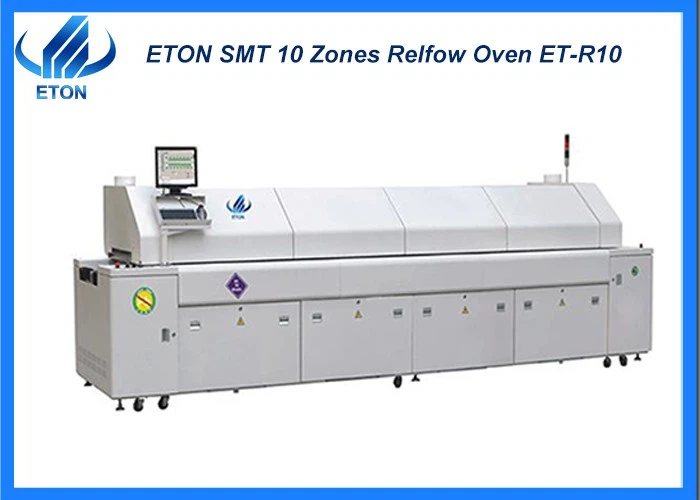
And if you need a high - power, large - scale solution, our 90KW Power 10 Zones SMT Reflow Oven Machine is the way to go. With 10 heating zones and 90KW of power, it can handle large circuit boards and high - temperature soldering requirements.
Conclusion
In conclusion, both manual and automatic SMT reflow ovens have their own advantages and disadvantages. Manual reflow ovens are great for small - scale, flexible production and for those on a budget. Automatic reflow ovens, on the other hand, are better for high - volume production, where precision, consistency, and speed are important.
If you're still not sure which type of reflow oven is right for your business, don't hesitate to contact us. We have a team of experts who can help you choose the best option based on your specific needs. Whether you're just starting out or looking to upgrade your existing equipment, we're here to assist you in making the right decision. Let's have a chat and see how we can help you improve your soldering process and boost your production efficiency.
References
- "SMT Reflow Soldering Handbook", Smith, J., 2020
- "Automation in Electronics Manufacturing", Brown, A., 2019